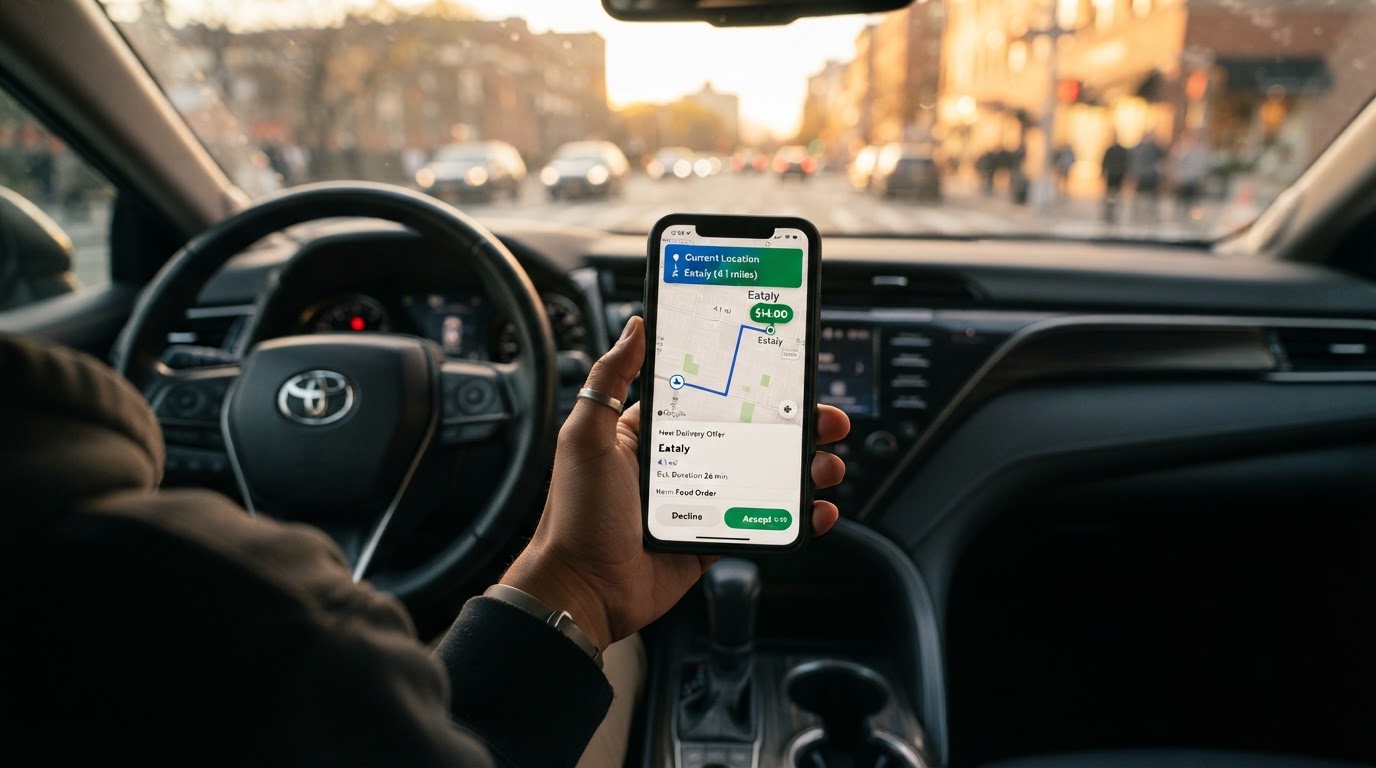
You're sitting in the lot. An offer pops up: $14. Not bad, right?
Then you look closer. The drop-off is out past the edge of your zone, and after you deliver it you'll drive all the way back. That's 22 miles round trip.
$14 ÷ 22 miles = about 64¢ a mile.
Now compare that with the IRS's standard mileage rate for the second half of 2026: 76¢ a mile, the IRS's published stand-in for what it costs to run a car. On paper, that offer pays less per mile than the IRS figures each mile costs.
The offer looked fine on screen. Counted out, it's thin. Here's how to catch that in 10 seconds, every time.
The 10-second check
Before you tap Accept, ask 2 questions.
1. How much per mile?
Pay ÷ total miles = dollars per mile
"Total" is the part most drivers skip. Count the drive to the drop-off and the drive back to where the next good offer is likely to come from. An offer that strands you 11 miles out costs you those 11 miles home, whether Spark pays for them or not.
2. How much per hour?
Pay ÷ total time = dollars per hour
Time starts now and ends when you're back in position for the next offer. Include the wait at the store, the drive out and the drive back.
Run both on the $14 offer
Say it takes 50 minutes start to finish:
- Per mile: $14 ÷ 22 = 64¢
- Per hour: $14 ÷ 50 minutes = $16.80 an hour before the miles
Take out the miles at 76¢: 22 × 76¢ = $16.72. That's more than the $14 you're paid. Using the IRS rate as your cost, you're $2.72 behind on that trip.
Your car may cost less than 76¢ a mile to run. But even at half that, the offer leaves you with a few dollars for most of an hour.
Now a $9 offer
A $9 offer, 6 miles total, 20 minutes start to finish:
- Per mile: $9 ÷ 6 = $1.50
- Per hour: $9 ÷ 20 minutes = $27 an hour before the miles
- Take out the miles: 6 × 76¢ = $4.56, which leaves $4.44 for 20 minutes, or $13.32 an hour
The $9 offer is smaller and worth far more of your time.
Example numbers to show the math, not what any driver should expect to earn.
Picking your floor? The free Earnings Maximizer walks you through $/mile, real $/hr, and the worst-stop rule for batches. Get the free guide →
Set your floor before the offer arrives
You won't have time to think it through with a timer running. Round robin offers, the ones marked "Just for you", come with a countdown. First come, first serve offers go to every available driver in your zone, so they don't wait either.
So decide your numbers ahead of time:
- Your floor per mile. Below it, you decline. For example, you might start at $1 a mile and adjust after a week of tracking.
- Your floor per hour. Use your real hourly rate from past shifts as the starting point. (Here's how to find it.)
Write them on a sticky note on your dash if it helps. When an offer comes in, you're comparing, not calculating from scratch.
What to read on the offer card
The offer card gives you what you need to decide: the estimated earnings, the delivery information, the pickup time and location, and any offer tags like Heavy item, Bulky item or Apartment.
Tags matter. A Heavy item or Apartment tag can mean more time per stop, so fold it into your per-hour guess.
And remember the earnings on the card are an estimate. Your final numbers arrive on the trip receipt after you deliver. Compare the 2 for a week and you'll learn how close the estimates run in your zone.
Declining is allowed. Say no before you accept.
Walmart's own help page says it plainly: as an independent contractor you choose which offers to accept, and there's no requirement to accept available offers. Tap the right arrow on the card, then Reject.
The time to say no is before you tap Accept. Walmart describes completion rate as the percentage of trips successfully delivered or returned, and completion rate is one of the metrics behind your Rewards tier. Declining an offer at the card doesn't touch it.
Tier points come from completed trips, not from how many offers you accept. So declining a bad offer doesn't cost you points either.
The bottom line
A bigger number on the card isn't always a better offer. Two quick divisions, pay by miles and pay by time, tell you which ones are worth your car. Set your floor today, and let the 64¢ batches go to someone else.
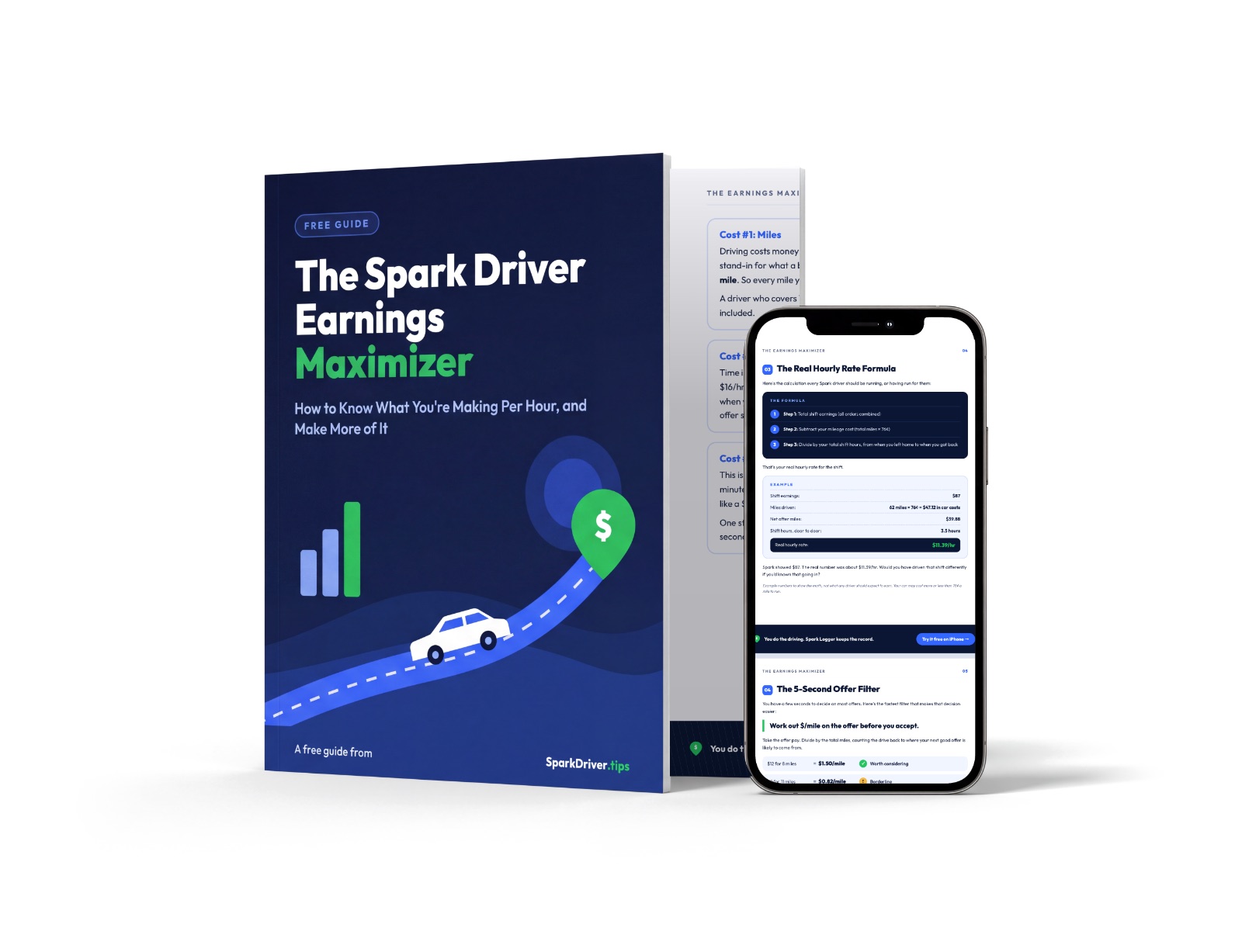
Know what you make per hour, after miles
- The real hourly rate formula
- A 5-second offer filter
- The worst-stop rule for batches
Sources: IRS standard mileage rates · Spark Driver: Understanding offers · Spark Driver: Accepting and completing offers · Spark Driver Rewards Program